Website concept. Demo brand; not an operating business.

OpenViewScreen & Patio

Rescreening & repair

Screen doors, closers and hardware replacement

Enclosure doors take more abuse than any other part of the frame. When a door drags, slams, won’t latch or drifts open on its own, a hardware repair or a new door usually fixes it without touching the rest of the enclosure.

  • Closers, hinges, latches and handles
  • Door adjustments or complete new doors
  • Corroded fasteners replaced
  • Pool-barrier door function kept in mind
Close-up illustration of an enclosure screen door with a push bar, pull handle, kick plate and a closer mounted near the top.Illustrative render

Door problems we fix

Common screen door symptoms
What you noticeLikely causeTypical fix
Door won’t latchMisaligned latch, sagging door or weak closerAdjust or replace the latch or closer; square the door
Door slams or won’t closeCloser worn out or out of adjustmentAdjust or replace the closer
Door drags on the deckWorn hinges, loose hinge screws or a sagging frameNew hinges or fasteners; a new door if the frame is bent
Handle or latch brokenWorn hardwareNew handle and latch set
Rust streaks at hinges and screwsFasteners corrodingReplace with corrosion-resistant fasteners
Door frame bent or crackedImpact or long wearReplace the door

If the door is part of your pool barrier

Many enclosure doors lead from the yard to the pool, which makes them part of the pool barrier. Under the Florida Building Code, gates in a pool barrier must open outward, away from the pool, and be self-closing and self-latching, with the latch release placed so a young child can’t reach it from outside. Replacement hardware should keep the door working that way.

We can’t certify barrier compliance; your building department decides. We will tell you if something about a door looks like it wouldn’t pass.

Closers, hinges and latches

Door closers range from spring hinges to adjustable closers that control closing speed. The right one depends on the door’s weight, how often it’s used, and whether it must self-close. Latches can be keyed or keyless; on barrier doors, where the release sits matters as much as the latch itself.

Rusty screws aren’t just cosmetic

Rust streaks around screws mean fasteners are corroding. On a door, that can loosen hinges and latches; elsewhere in an enclosure it can weaken connections. Replacing a few corroded fasteners is routine maintenance, but widespread corrosion at posts, beams or the house attachment is a structural question. See enclosure replacement and restoration.
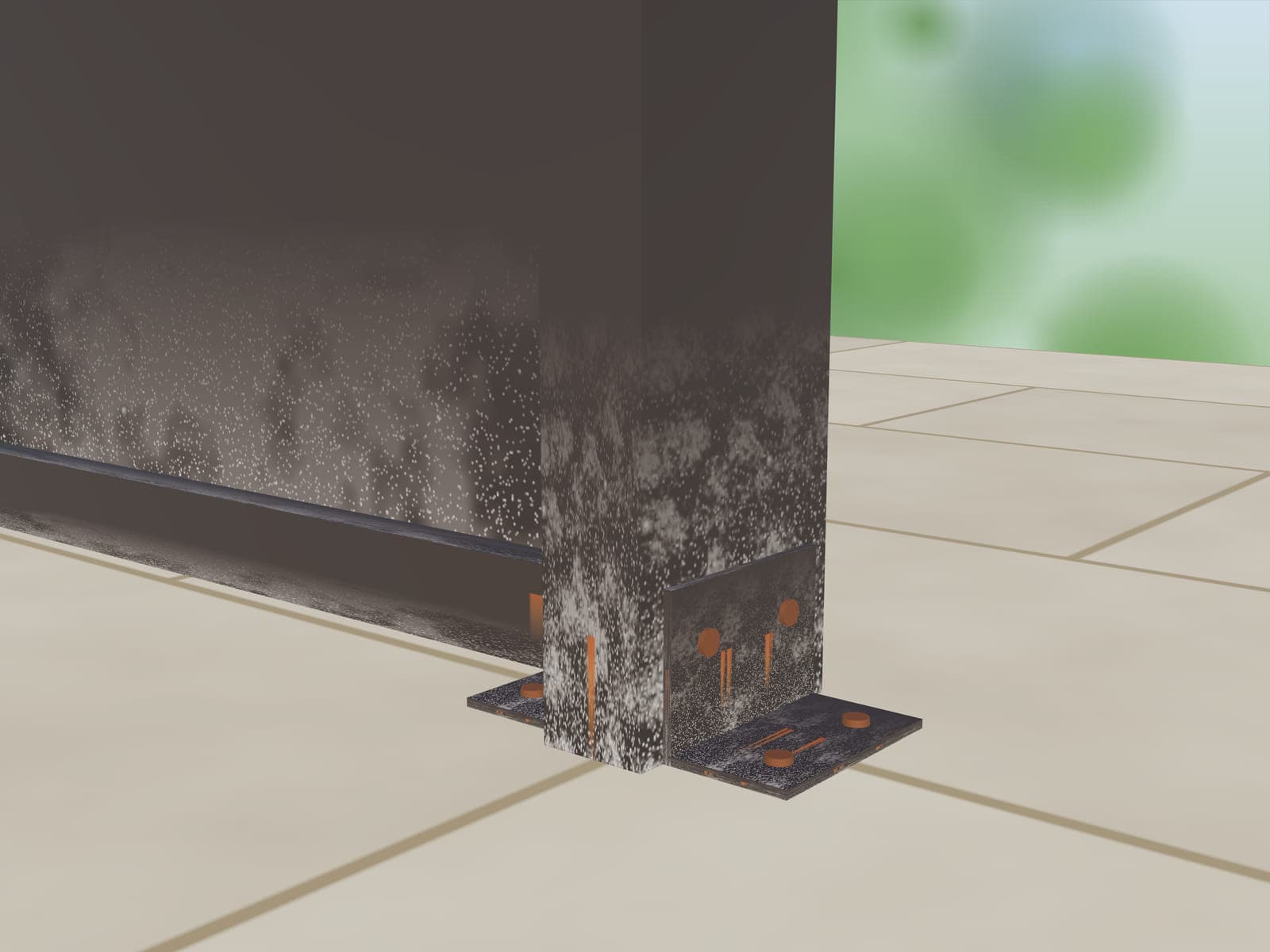
Close-up illustration of the base of a bronze aluminum enclosure post with white, powdery corrosion and rust-stained fasteners where it meets the pool deck.Illustrative render
Illustration: powdery corrosion and rust-stained fasteners at the base of a post call for a closer look.

When a new door makes more sense

Bent frames, cracked corners and doors that have been repaired again and again are usually better replaced. A new door is sized to the opening and finished to match the frame, with a kick plate, push bar and hardware chosen for how the door is used.
Budget

What affects cost and scope

We don’t publish prices because these details are only visible on site. They’re reviewed before pricing and written into your scope.

  • Repair or replace

    Adjusting hardware costs less than a new door.

  • Hardware choice

    Spring hinges, adjustable closers, keyed or keyless latches.

  • Door size

    Non-standard openings may need a custom-sized door.

  • Opening condition

    A racked or damaged opening may need work before a door hangs correctly.

  • Number of doors

    Several doors in one visit are more efficient than separate trips.

Scope

What’s included, and what isn’t

Typically included

  • Diagnosis of the door, frame opening and hardware
  • Adjustment or replacement of closers, hinges, latches and handles listed in the scope
  • Replacement of corroded fasteners at the door
  • New doors sized to the opening, when that’s the better fix

Not included

  • Certifying pool-barrier compliance (the building department decides)
  • Structural repairs to the enclosure beyond the door opening
  • Adding new door openings without a design review (see FAQs)

Questions

Frequently asked

Can you replace the door without rescreening the enclosure?

Yes. Doors and hardware are often repaired on their own.

My door closes too hard. Can it be adjusted?

Often. Many closers have a speed adjustment. If a closer is leaking or worn out, replacement is the fix.

Can you add a second door?

Adding a door changes the frame and possibly the pool barrier, so it’s planned like a small structural change and may need a permit.

Will new hardware make my door code compliant?

We install hardware intended to keep a barrier door self-closing and self-latching and point out anything that looks noncompliant, but only the building department can determine compliance.

Request Rescreening or Repair

Requests are reviewed by a person. Before discussing pricing, we look at measurements and the visible condition of the space or enclosure.

What do you need? (required)

New work

Rescreening & repair

Add details (optional)

Rough is fine, for example “deck about 30 × 40 ft” or “three walls, about 10 ft each.”

Screen or frame concerns (optional)

0 / 1,500 characters

Demo mode: this form checks your answers but sends nothing.

Sending a request doesn’t book an appointment. We review measurements and visible condition before pricing. See our privacy policy.

Keep reading

Illustrative render

Service

Individual screen-panel repair

New screen and spline in the damaged panels, plus a look at what caused the damage.

Illustrative render

Service

Complete enclosure rescreening

New screen and spline across the walls, roof or both, after a check of the frame, fasteners and doors.

Illustrative render

Service

New pool screen enclosures

A screened frame over the pool and deck: fewer bugs, less debris, and an outdoor room built around your view.

Guide

Rescreen, repair or replace?

Assess in the right order—safety, structure, doors and fasteners, then screen—before paying for new screen.

Guide

What affects cost and scope

Dimensions, roof shape, spans, screen choice, foundations, access and permits—and how to compare estimates fairly.

Illustrative example

Illustrative: rescreening scope

What a written rescreening scope might include for an older enclosure, and what would pause the work.

Demo mode

About this website

This is a website concept for a screen enclosure company. The brand name is a placeholder, and no active service business is taking requests through this site. Forms, phone, text and email actions are in demo mode: nothing you enter is sent or stored, and all images are illustrative renders.

“OpenView Screen & Patio” is a demonstration name and is not presented as a registered or operating business.