Key takeaways
- Standard 18×14 fiberglass mesh is the common baseline: good visibility and airflow, and it keeps out most flying insects.
- Finer 20×20 mesh blocks smaller biting insects with a modest loss of airflow and clarity.
- Tear-resistant screens trade some visibility for durability and are popular below the chair rail.
- Privacy and solar screens are denser. Check them against the enclosure’s engineering; some are rated for walls only.
How screen is described
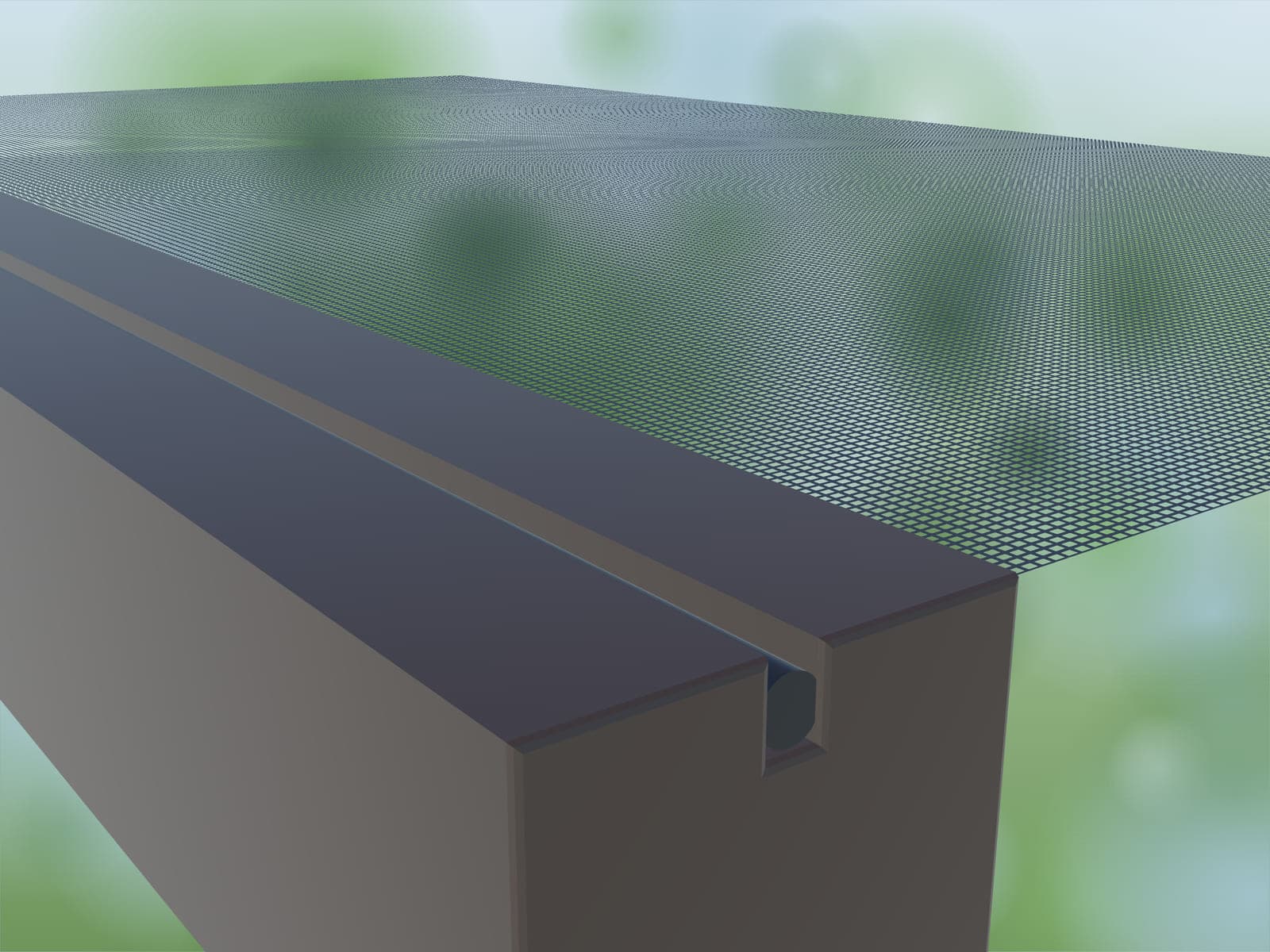
Screen is usually described by its mesh count: the number of strands per inch in each direction. An 18×14 screen has 18 strands per inch one way and 14 the other; a 20×20 screen has smaller openings in both directions. Higher counts keep out smaller insects, but they also block a little more air and view.
Material matters too. Most enclosure screen is vinyl-coated fiberglass. Heavier tear-resistant screens are often vinyl-coated polyester with thicker strands. Color affects visibility: darker screens, such as charcoal, are generally easier to see through than lighter ones.
Relative weave density (schematic)
Standard 18×14
Common baseline
Fine 20×20
Smaller openings
Tear-resistant
Thicker strands
Privacy / solar
Much denser weave
Standard 18×14 mesh
Standard 18×14 fiberglass is the common default for pool enclosures and lanais for good reason: it balances clear views, good airflow and protection from mosquitoes, flies and larger flying insects. It is also the easiest screen to match when a panel needs repair later.
Fine 20×20 (“no-see-um”) mesh
Tiny biting midges, often called no-see-ums, can slip through standard openings. A 20×20 mesh has smaller openings designed to keep most of them out, while still moving air. Expect a slight reduction in airflow and view compared with standard mesh.
Tear- and pet-resistant screen
Manufacturers make heavier screens marketed as tear- and puncture-resistant. They hold up better to claws, paws, toys and furniture, but the thicker strands block more of the view and add weight. That is why they are often used only below the chair rail, on doors, or on the wall that takes the most wear.
Product lines differ: some heavier pet screens are intended mainly for doors and windows rather than large pool and patio panels. Ask what is rated for the specific application.
Privacy and solar screens
Privacy and solar screens use denser weaves or laminated strands. They make it harder to see into the space in daylight and can cut glare and sun on the deck. The tradeoffs are less airflow and less outward visibility, and privacy works best when it’s brighter outside than inside; at night, with lights on in the enclosure, people outside can see in more easily.
Mixing screens by location
| Location | Common choice | Why |
|---|---|---|
| Roof | Standard or finer mesh | Keeps the roof light and open; confirm any change against the design |
| Upper walls | Standard or finer mesh | Best visibility at eye level |
| Below the chair rail | Tear-resistant | Takes the kicks, paws and furniture bumps |
| Wall facing a neighbor | Privacy screen, if the design allows | Softens a direct view into the space |
| Doors | Tear-resistant or matching the walls | High-traffic panels wear fastest |
Caring for screen
- Follow the manufacturer’s care instructions. Typically that means mild soap, a soft brush and a gentle rinse with a garden hose.
- Avoid blasting screen with a pressure washer at close range; it can stretch or tear the mesh and damage finishes.
- Fix small tears early, before wind and use make them bigger.
- Keep sprinklers from spraying the same panels constantly, which can stain screen and frames.
- Never climb on the enclosure or lean ladders against it to clean the roof.
Ready to change screen types? That usually happens during a complete rescreen or panel repairs.